Bouillabaisse – Classic Mediterranean Seafood Soup
Bouillabaisse is far more than just a seafood soup. It is a symbol of the Mediterranean coast, a reflection of seaside culture, and a dish deeply rooted in history, tradition, and local pride. Originating in the port city of Marseille, bouillabaisse began as a humble fisherman’s stew—crafted from the unsold catch of the day, simmered in seawater with herbs and aromatics. Over time, it evolved into one of France’s most celebrated dishes, known for its luxurious broth, layered flavors, and dramatic presentation.
Today, bouillabaisse represents the heart of Provençal cuisine: rustic yet refined, simple yet complex, and always deeply connected to the sea. This recipe honors tradition while remaining approachable for the home cook. It delivers a richly scented saffron broth, tender fish, briny shellfish, and that unmistakable Mediterranean character that makes bouillabaisse unforgettable.
Whether you are cooking for a special occasion or recreating a coastal French experience at home, this classic Mediterranean seafood soup is a dish worth savoring slowly.
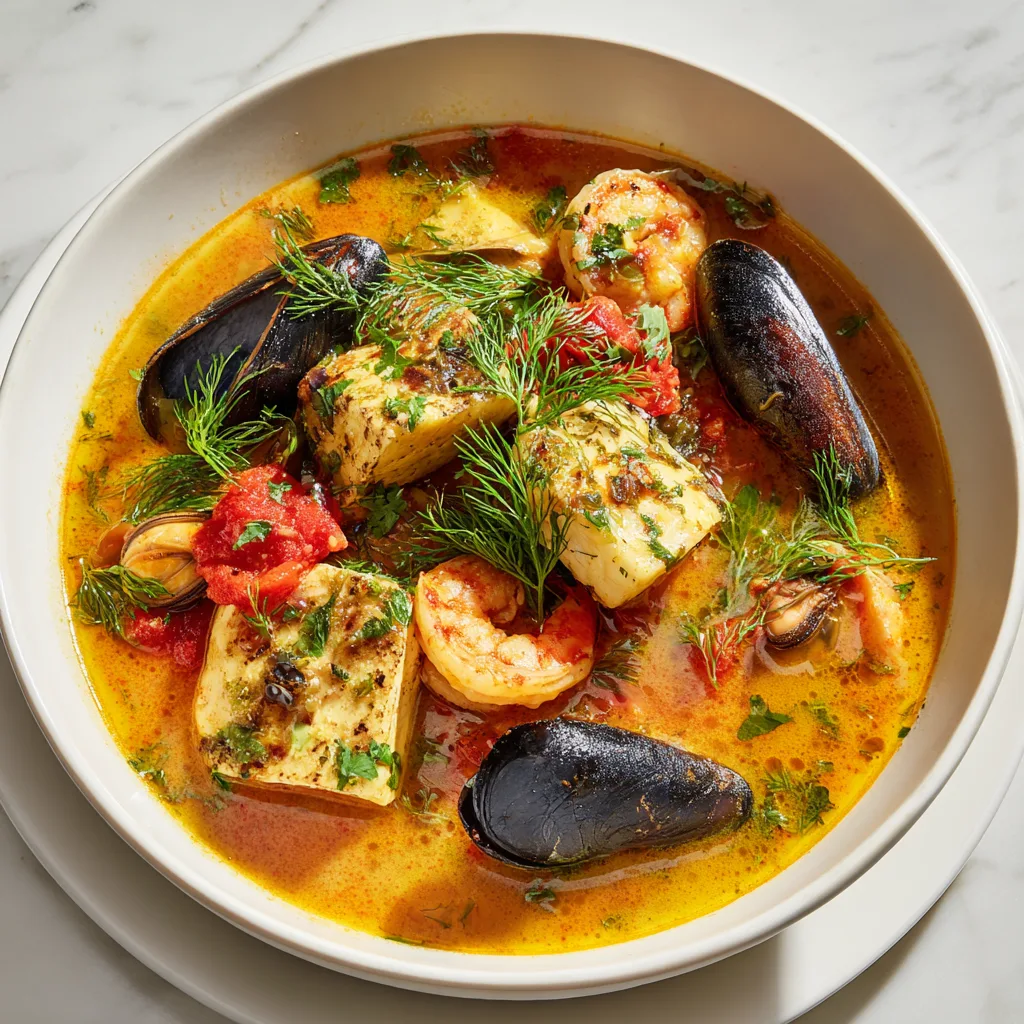
What Makes Bouillabaisse Unique?
Unlike many seafood soups or stews, bouillabaisse relies on technique as much as ingredients. The name itself comes from two Provençal words: bolhir (to boil) and abaissar (to lower). The process involves bringing the broth to a vigorous boil, then lowering the heat to gently simmer—allowing flavors to develop without overcooking the delicate seafood.
Traditional bouillabaisse uses multiple types of fish, especially bony Mediterranean varieties, which enrich the broth. Saffron, fennel, orange peel, garlic, and tomatoes give the soup its signature aroma and golden hue. The dish is typically served in two parts: first the broth with bread and rouille, followed by the fish and shellfish.
Ingredients
- Olive oil
- Yellow onion, finely chopped
- Leek, sliced
- Fennel bulb, thinly sliced (reserve fronds for garnish)
- Garlic cloves, minced
- Tomato paste
- Fresh tomatoes, chopped
- Orange peel (small strip, pith removed)
- Bay leaf
- Fresh thyme
- Saffron threads
- White fish stock or seafood stock
- Dry white wine
- Firm white fish fillets (such as cod, snapper, or sea bass), cut into large chunks
- Oily fish (such as mackerel or monkfish), cut into chunks
- Mussels, cleaned and debearded
- Shrimp or prawns, peeled and deveined
- Salt, to taste
- Freshly ground black pepper
- Fresh parsley, chopped
- Crusty baguette slices, toasted (for serving)
- Rouille sauce (optional but traditional)
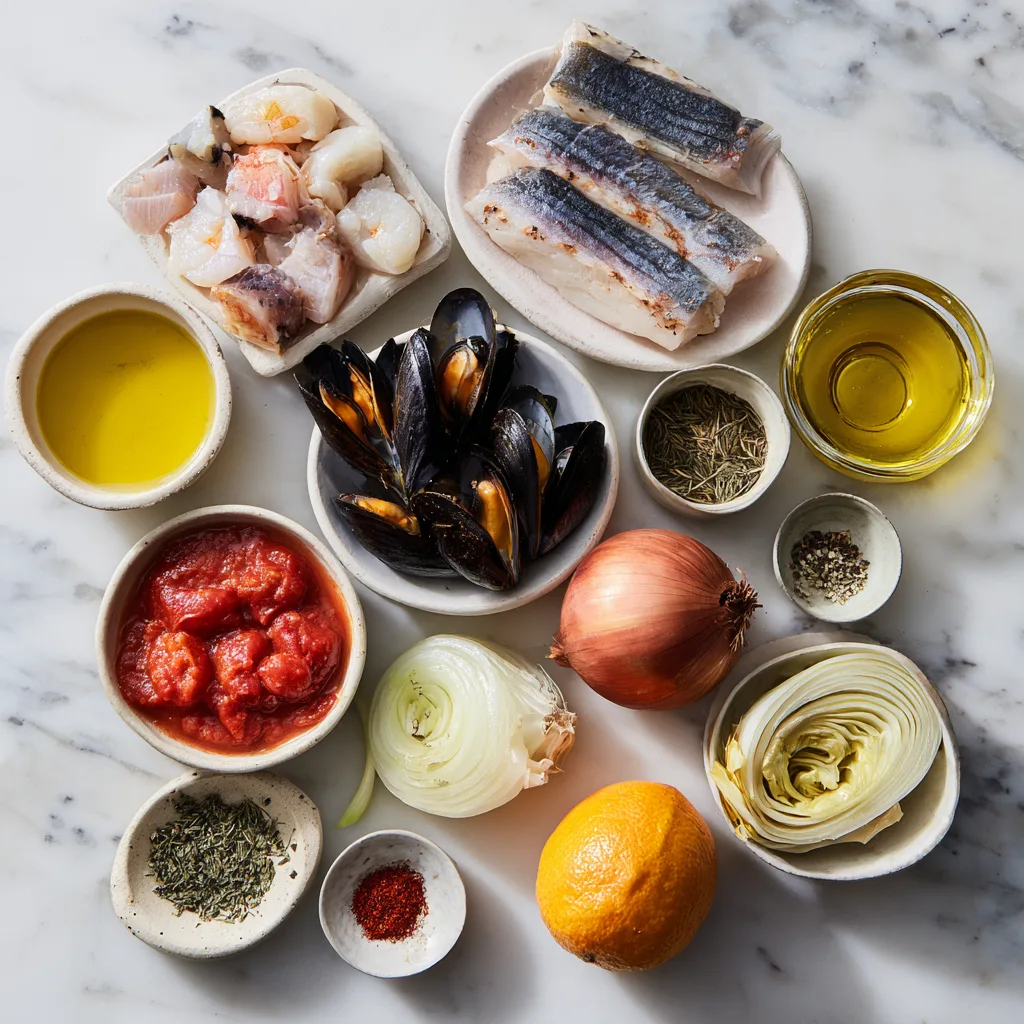
Instructions
- Heat olive oil in a large, heavy-bottomed pot over medium heat. Add the onion, leek, and fennel. Sauté gently for 8–10 minutes until softened but not browned.
- Stir in the garlic and tomato paste. Cook for 1 minute until fragrant.
- Add the chopped tomatoes, bay leaf, thyme, orange peel, and saffron threads. Stir to combine.
- Pour in the white wine and let it simmer for 2–3 minutes to reduce slightly.
- Add the seafood stock and bring the mixture to a rolling boil. Once boiling, lower the heat and simmer for 20 minutes to develop the broth.
- Season the broth with salt and freshly ground black pepper. Taste and adjust as needed.
- Add the firm white fish pieces to the pot. Simmer gently for 5 minutes.
- Add the oily fish, mussels, and shrimp. Cover and cook for another 5–7 minutes, until the mussels open and the seafood is just cooked through.
- Discard any mussels that do not open. Remove the bay leaf and orange peel.
- Ladle the bouillabaisse into bowls, garnish with fennel fronds and parsley, and serve immediately with toasted baguette and rouille.
The Role of Rouille in Bouillabaisse
Rouille is a garlicky Provençal sauce traditionally served with bouillabaisse. Made from garlic, olive oil, breadcrumbs, saffron, and chili, it adds richness and gentle heat. Diners typically spread rouille on toasted bread and dip it into the broth, intensifying every spoonful.
While optional, rouille elevates bouillabaisse from a simple soup to a complete culinary experience.
Tips for Perfect Bouillabaisse
- Use the freshest seafood possible: Bouillabaisse relies on clean, briny flavors. Fresh fish and shellfish make all the difference.
- Don’t overcook the seafood: Add fish and shellfish in stages to keep them tender.
- Saffron matters: Even a small amount transforms the broth. Use high-quality saffron threads.
- Homemade stock is best: If possible, use homemade fish stock for deeper flavor.
- Serve immediately: Bouillabaisse is best enjoyed hot, right after cooking.
Variations and Adaptations
While purists may insist on strict rules, bouillabaisse has always been a dish shaped by availability. Feel free to adapt:
- Shellfish-heavy version: Add clams, lobster, or crab.
- Simplified home version: Use fewer fish varieties for convenience.
- Spicy twist: Add a pinch of chili flakes or cayenne.
- No-alcohol option: Replace wine with additional stock and a splash of lemon juice.
Serving Suggestions
Bouillabaisse is a meal in itself, but it pairs beautifully with:
- A crisp Mediterranean white wine
- Simple green salad with lemon vinaigrette
- Extra crusty bread for soaking up broth
Serve it family-style for an authentic coastal feel.
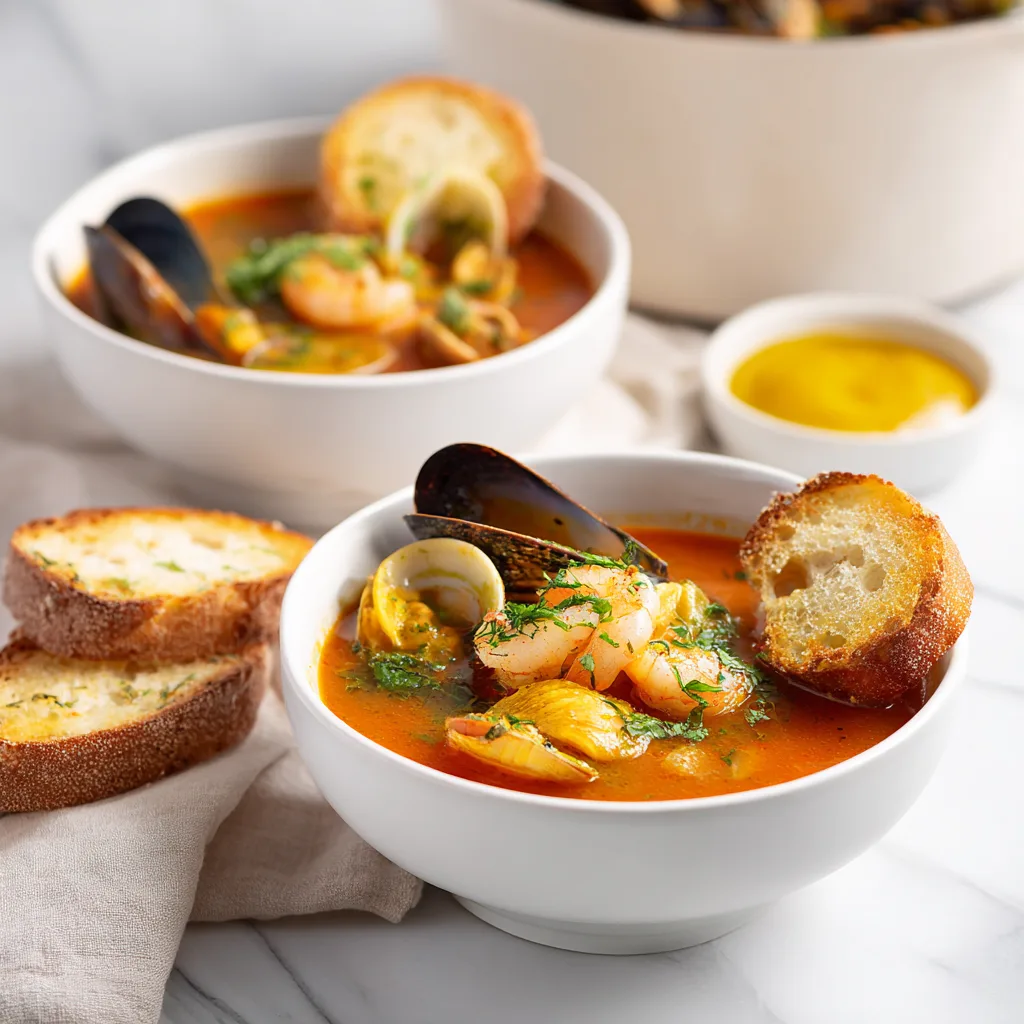
Cultural Notes and Fun Facts
- In Marseille, traditional bouillabaisse is protected by a culinary charter outlining proper ingredients and methods.
- The dish was once considered poor man’s food before becoming a symbol of luxury dining.
- Bouillabaisse is often served in two courses in traditional restaurants.
Why Bouillabaisse Endures
Bouillabaisse endures because it tells a story—of fishermen, the sea, and a way of life shaped by tides and seasons. Every bowl captures the essence of the Mediterranean: sun-warmed herbs, briny waters, and honest cooking. It is both comforting and celebratory, rustic and elegant.
This classic Mediterranean seafood soup is not about perfection but about balance, generosity, and respect for ingredients. Once you make it, bouillabaisse becomes more than a recipe—it becomes a tradition you return to again and again.
Bouillabaisse – Classic Mediterranean Seafood Soup
Ingredients
Equipment
Method
- Heat olive oil in a large pot over medium heat. Sauté onion, leek, and fennel until soft.
- Add garlic and tomato paste, cooking until fragrant.
- Stir in tomatoes, bay leaf, thyme, and saffron.
- Pour in white wine and simmer briefly.
- Add seafood stock and simmer to develop flavor.
- Add fish in stages, followed by mussels and shrimp.
- Cook until seafood is just done and mussels open.
- Serve hot with bread and optional rouille.