Classic Flaky French Croissants: Buttery Layers of Bakery Perfection
There’s something undeniably magical about biting into a perfectly baked croissant. The crisp, golden exterior gives way to delicate, airy layers that melt in your mouth, leaving behind a rich, buttery flavor that feels both indulgent and comforting. While croissants may seem intimidating to make at home, mastering this classic French pastry is entirely possible with patience, attention to detail, and the right technique.
This Classic Flaky French Croissants recipe walks you through every step of the traditional lamination process, ensuring bakery-quality results right from your own kitchen. Whether you’re preparing a luxurious breakfast, brunch centerpiece, or simply treating yourself, these croissants deliver elegance and flavor in every bite.

What Makes Croissants So Special?
Croissants are a hallmark of French baking, known for their signature crescent shape and delicate layers. The secret lies in a process called lamination—folding butter into dough multiple times to create thin layers that puff up beautifully when baked.
Unlike simple bread recipes, croissants require time and precision. But the reward? A batch of golden pastries that rival those found in Parisian bakeries.
Ingredients
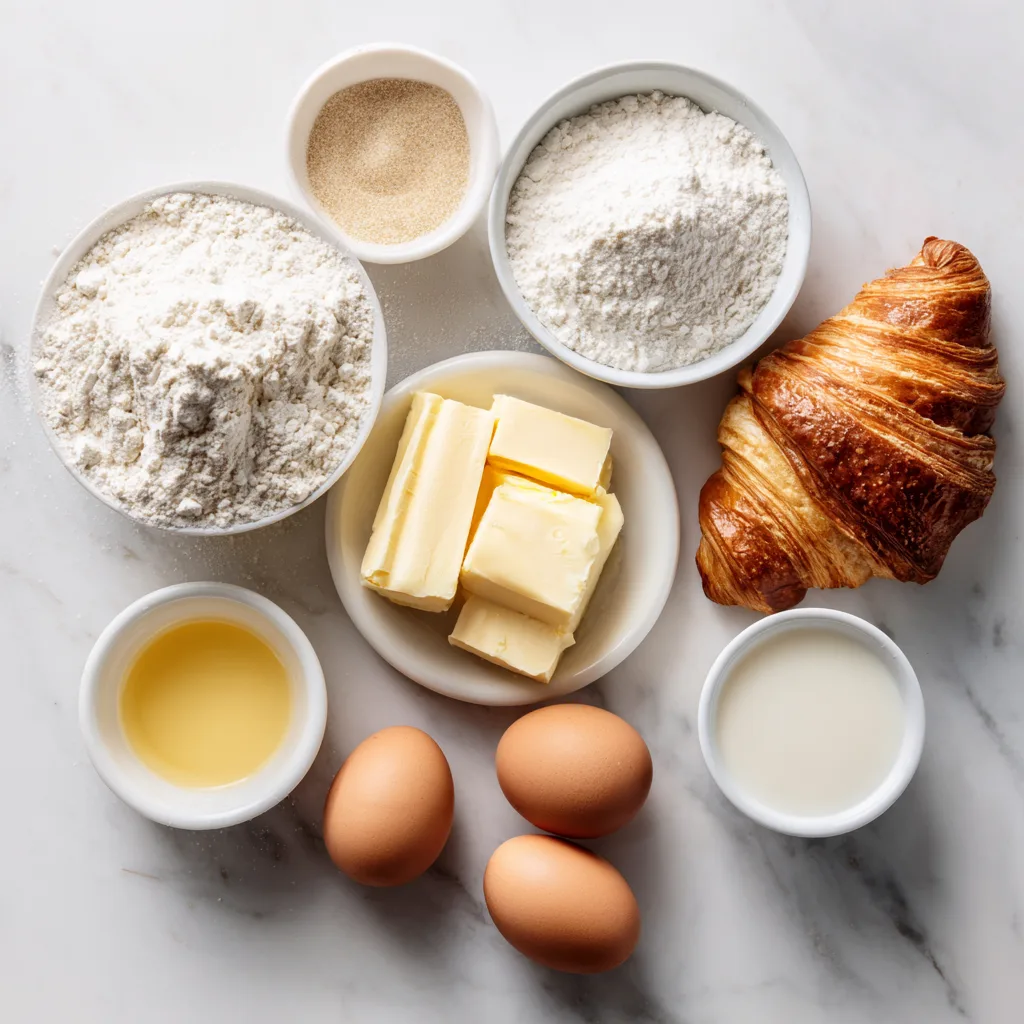
- 4 cups all-purpose flour
- 1/3 cup granulated sugar
- 2 1/4 teaspoons active dry yeast
- 1 1/4 cups warm milk
- 1 teaspoon salt
- 1 cup unsalted butter (cold, for lamination)
- 1 egg (for egg wash)
- 1 tablespoon water
Why These Ingredients Matter
Every ingredient plays a key role in achieving that iconic croissant texture:
- Flour: Provides structure while allowing elasticity for rolling and folding.
- Butter: The heart of the croissant—responsible for those flaky layers.
- Yeast: Creates the light, airy interior.
- Milk: Adds richness and softness.
- Sugar: Enhances flavor and promotes browning.
Instructions
- In a bowl, dissolve yeast in warm milk and let sit for 5–10 minutes until foamy.
- In a large mixing bowl, combine flour, sugar, and salt. Add the yeast mixture and mix until a dough forms.
- Knead the dough for about 8–10 minutes until smooth and elastic. Cover and refrigerate for at least 1 hour.
- Place cold butter between parchment paper and roll into a flat rectangle. Chill until firm but pliable.
- Roll out the chilled dough into a large rectangle. Place the butter slab in the center and fold the dough over it like an envelope.
- Roll the dough out again and fold into thirds (like a letter). Chill for 30 minutes.
- Repeat the rolling and folding process 2–3 more times, chilling between each fold.
- After the final fold, roll the dough into a large rectangle about 1/4 inch thick.
- Cut into triangles and roll each triangle from base to tip to form the croissant shape.
- Place on a baking sheet, cover loosely, and let rise for 1–2 hours until puffy.
- Preheat oven to 375°F (190°C).
- Brush croissants with egg wash (egg + water).
- Bake for 18–22 minutes until golden brown and crisp.
- Cool slightly before serving.
The Art of Lamination
The lamination process is what transforms simple dough into a masterpiece. Each fold creates layers of butter and dough that expand in the oven, producing that signature flakiness.
Pro tip: Keep everything cold. If the butter melts into the dough instead of staying layered, you’ll lose that flaky structure.
Tips for Perfect Croissants
1. Temperature Control is Key
Always work with chilled dough and butter. If your kitchen is warm, chill the dough more frequently.
2. Don’t Rush the Process
Croissants take time. Skipping resting periods will affect texture and rise.
3. Use High-Quality Butter
Since butter is the star ingredient, choose one with a high fat content for the best flavor and layering.
4. Roll Evenly
Consistency in thickness ensures even baking and uniform layers.
Common Mistakes to Avoid
- Overworking the dough: This can make croissants tough instead of tender.
- Butter leakage: Happens when butter gets too warm—chill more often.
- Under-proofing: Results in dense croissants. Make sure they’re visibly puffy before baking.
Variations to Try
Once you’ve mastered the classic version, you can get creative:
Chocolate Croissants
Add a strip of dark chocolate before rolling for a pain au chocolat twist.
Almond Croissants
Fill with almond paste and top with sliced almonds and powdered sugar.
Savory Croissants
Incorporate cheese, ham, or herbs for a delicious savory option.
Serving Suggestions
Classic croissants are incredibly versatile:
- Serve warm with butter and jam for breakfast
- Pair with coffee or tea for a café-style experience
- Use as a base for sandwiches
- Enjoy with honey or Nutella for a sweet treat
Storage and Reheating
- Room Temperature: Store in an airtight container for up to 2 days
- Freezing: Freeze baked croissants for up to 1 month
- Reheating: Warm in the oven at 300°F (150°C) for 5–7 minutes
Fun Facts About Croissants
- Despite being a French icon, croissants actually originated in Austria.
- The name “croissant” means “crescent” in French.
- Traditional croissants contain no fillings—just pure buttery layers.

Why Make Croissants at Home?
Homemade croissants offer unmatched freshness and flavor. While store-bought versions are convenient, they often lack the delicate texture and rich taste that come from careful, handcrafted preparation.
Plus, there’s a deep sense of satisfaction in mastering such a classic pastry. It’s not just baking—it’s an experience.
Final Thoughts
Making Classic Flaky French Croissants from scratch is a labor of love, but one that rewards you with bakery-quality results. With patience, practice, and attention to detail, you’ll be able to create golden, buttery pastries that impress every time.
Whether you’re baking for a special occasion or simply elevating your morning routine, these croissants bring a touch of French elegance to your table.
Classic Flaky French Croissants
Ingredients
Equipment
Method
- Activate yeast in warm milk until foamy.
- Mix flour, sugar, and salt. Add yeast mixture to form dough.
- Knead until smooth, then chill.
- Prepare butter slab and enclose in dough.
- Roll and fold dough multiple times, chilling between folds.
- Shape into triangles and roll into croissants.
- Proof until puffy.
- Brush with egg wash and bake until golden.