Easy Homemade Miso Soup Recipe with Tofu and Seaweed
Few dishes are as quietly comforting and universally loved as a warm bowl of miso soup. Light yet deeply savory, simple yet layered with flavor, homemade miso soup is one of those recipes that feels both nourishing and grounding. This Easy Homemade Miso Soup with Tofu and Seaweed brings the heart of traditional Japanese cooking into your kitchen in a way that’s approachable, fast, and incredibly satisfying.
Whether you’re serving it as a starter, enjoying it as a light lunch, or pairing it with a full Japanese-inspired meal, this recipe proves that you don’t need hours or hard-to-find skills to make restaurant-quality miso soup at home. With just a handful of ingredients and a few mindful steps, you’ll have a bowl of soup that tastes clean, savory, and deeply comforting.
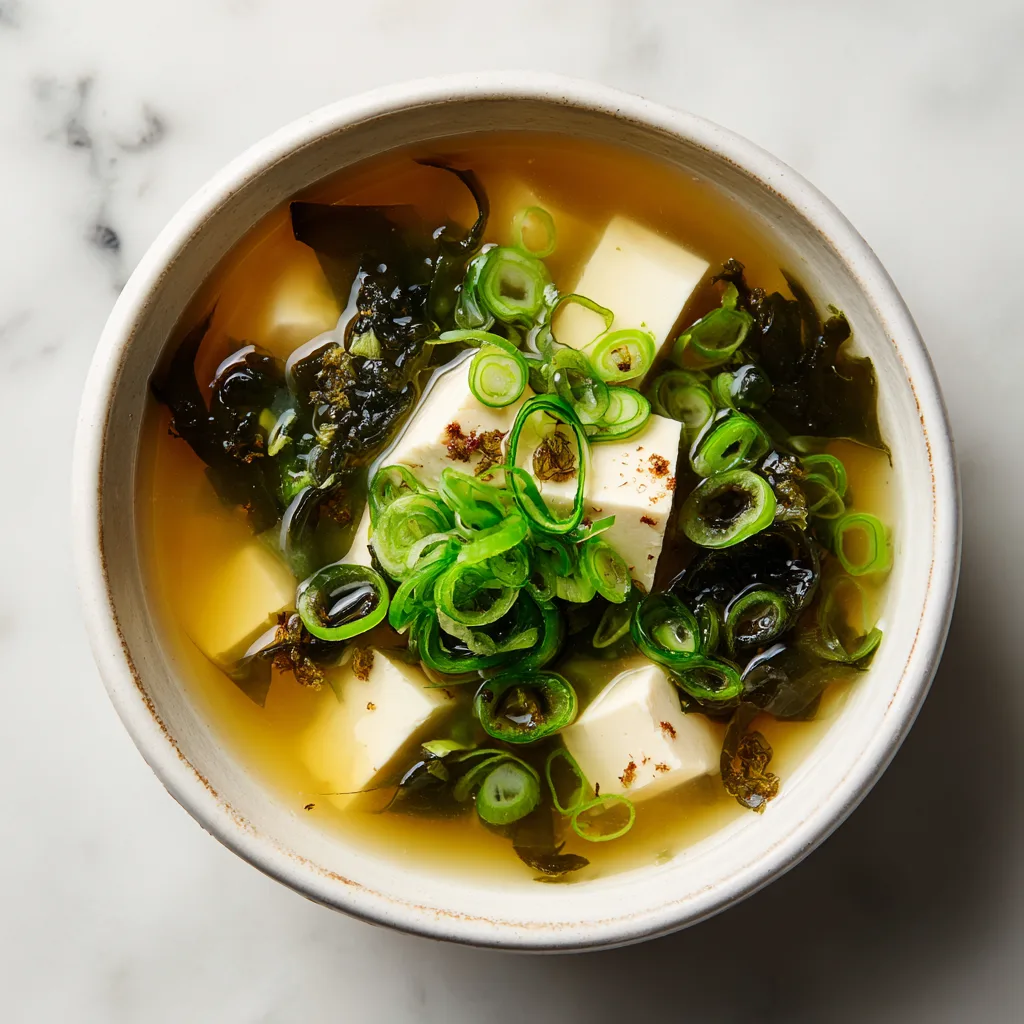
Why Homemade Miso Soup Is Worth Making
Miso soup is often underestimated because of its simplicity. But behind that simplicity is centuries of culinary wisdom. Miso paste, made from fermented soybeans and grains, provides natural umami, gut-friendly probiotics, and a depth of flavor that feels far richer than the ingredient list suggests.
Making miso soup at home allows you to:
- Control salt levels
- Choose high-quality miso
- Customize tofu, seaweed, and garnishes
- Enjoy it fresh, where its flavor truly shines
This easy miso soup recipe is ideal for beginners and experienced cooks alike. It respects tradition while staying flexible enough for modern kitchens.
Ingredients
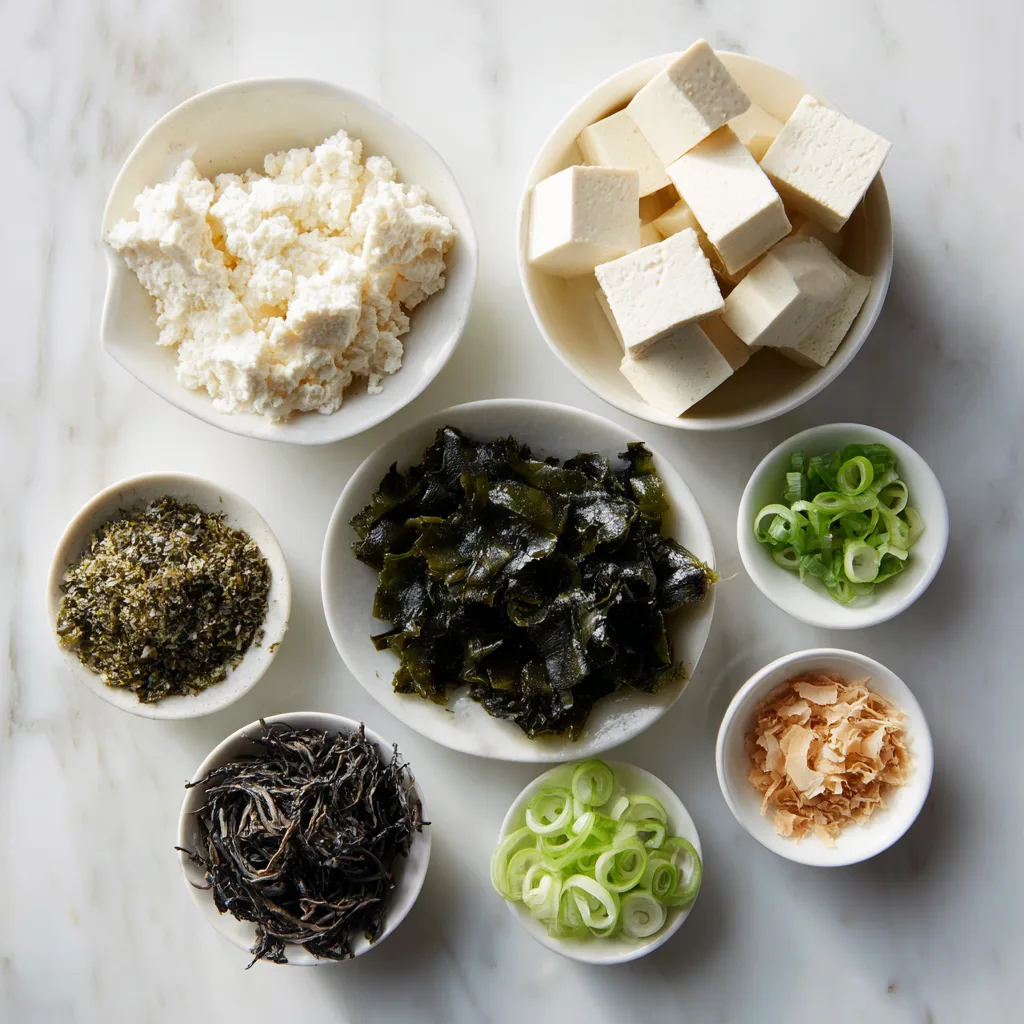
Use fresh, high-quality ingredients whenever possible. Each component plays a specific role in creating balance and depth.
- Water
- Kombu (dried kelp)
- White miso paste (or yellow miso)
- Firm or silken tofu, cut into small cubes
- Dried wakame seaweed
- Green onions, thinly sliced
Optional additions:
- Bonito flakes (for extra umami)
- Sesame oil (a few drops for aroma)
- Mushrooms (shiitake or enoki)
Instructions
- Prepare the dashi base:
Add water and kombu to a pot and let it soak for 20–30 minutes if time allows. Heat gently over medium heat until just before boiling, then remove the kombu. - Add tofu and seaweed:
Bring the liquid to a gentle simmer. Add cubed tofu and rehydrated wakame seaweed. Simmer for 2–3 minutes. - Dissolve the miso paste:
Reduce heat to low. Place miso paste in a ladle, dip it into the hot broth, and stir gently until dissolved. Never boil after adding miso. - Finish and garnish:
Taste and adjust. Ladle into bowls and garnish with green onions. Serve immediately.
The Importance of Dashi in Miso Soup
Traditional Japanese miso soup relies on dashi, a light broth that forms the backbone of flavor. In this recipe, kombu creates a clean, ocean-like savoriness that complements miso beautifully. If you prefer a deeper flavor, you can add bonito flakes after removing the kombu, then strain before continuing.
Using dashi doesn’t complicate the recipe—it elevates it.
Choosing the Right Miso Paste
Miso paste varies in color, flavor, and intensity. For this recipe:
- White miso: Mild, slightly sweet, beginner-friendly
- Yellow miso: Balanced and savory
- Red miso: Bold and salty (use sparingly)
If you’re new to miso soup, white or yellow miso is the best place to start.
Tofu Tips for Perfect Texture
Tofu is gentle by nature and should be treated kindly:
- Use fresh tofu
- Cut into small, even cubes
- Add gently to avoid breaking
Silken tofu creates a delicate texture, while firm tofu adds more structure. Both work beautifully.
Wakame Seaweed: Small but Powerful
Dried wakame expands quickly and adds subtle ocean flavor without overpowering the soup. A little goes a long way. Always rehydrate before adding to the pot.
Health Benefits of Miso Soup
This healthy miso soup isn’t just comforting—it’s nourishing:
- Fermented miso supports gut health
- Tofu provides plant-based protein
- Seaweed contains minerals like iodine
- Low in calories yet satisfying
When made at home, miso soup fits easily into balanced diets and mindful eating routines.
Variations to Try
Once you master the base recipe, explore variations:
- Add mushrooms for earthiness
- Include spinach or bok choy
- Stir in noodles for a heartier meal
- Use chickpea miso for a soy-free option
Serving Suggestions
Serve miso soup:
- As a starter before sushi or rice bowls
- With a simple salad for lunch
- Alongside grilled fish or vegetables
- As a comforting evening sip
It’s versatile enough to fit almost any meal.
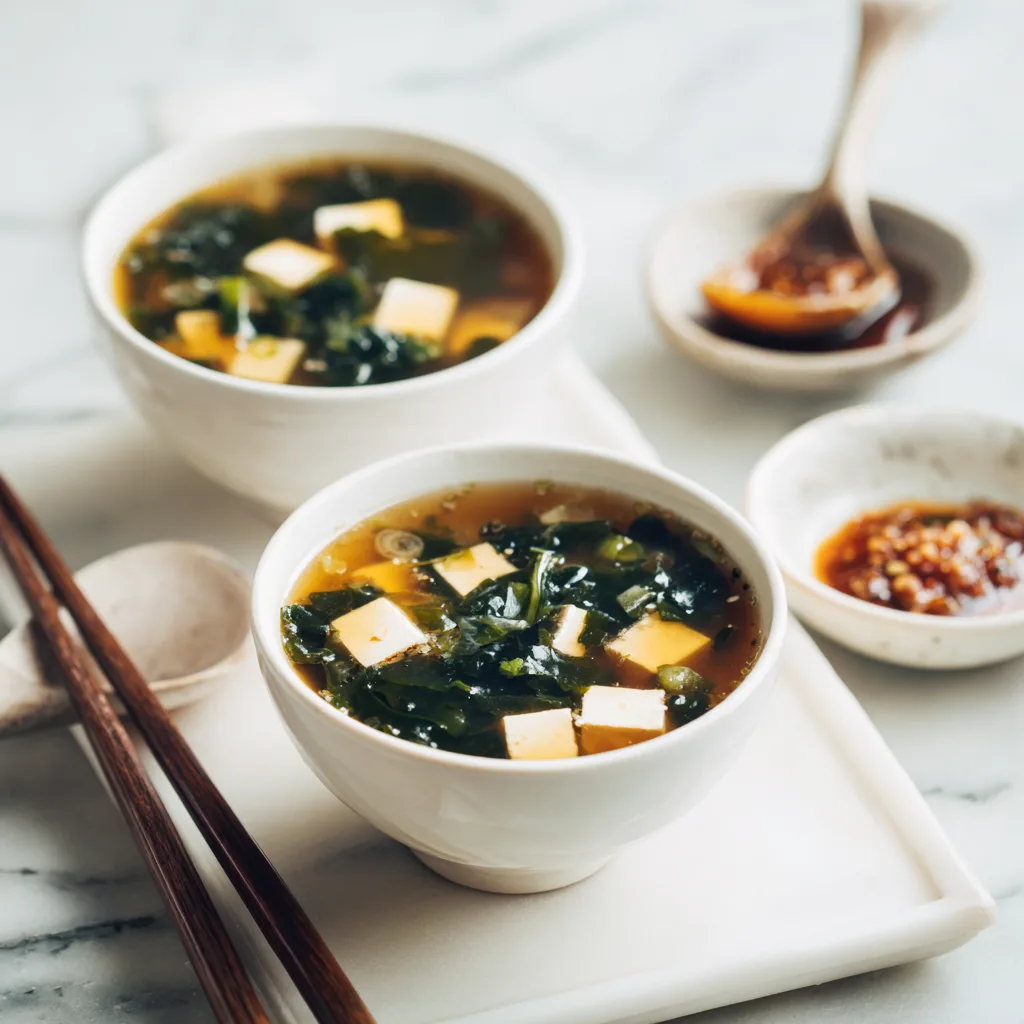
Cultural Context: A Daily Ritual
In Japan, miso soup isn’t just food—it’s routine. Often served at breakfast, lunch, and dinner, it represents balance and care. Making it at home connects you to that tradition, even in a modern kitchen.
Storage and Reheating
Miso soup is best fresh, but leftovers can be stored:
- Refrigerate up to 2 days
- Reheat gently without boiling
- Add fresh garnishes before serving
Final Thoughts
This Easy Homemade Miso Soup with Tofu and Seaweed proves that simple cooking can be deeply satisfying. It’s fast, flexible, nourishing, and endlessly comforting. Once you make it from scratch, it’s hard to go back to instant versions.
A bowl of miso soup isn’t just soup—it’s a pause, a breath, a moment of warmth in your day.
Easy Homemade Miso Soup with Tofu and Seaweed
Ingredients
Equipment
Method
- Add water and kombu to a saucepan and heat gently until just before boiling. Remove kombu.
- Add tofu and rehydrated wakame to the pot and simmer gently for 2–3 minutes.
- Lower heat and dissolve miso paste in a ladle with hot broth, then stir into soup.
- Do not boil after adding miso. Taste and adjust.
- Serve hot, garnished with sliced green onions.