Fresh Homemade Pico de Gallo: The Ultimate Guide to a Classic Mexican Favorite
Few recipes celebrate freshness, simplicity, and bold flavor quite like Fresh Homemade Pico de Gallo. This iconic Mexican salsa—made with ripe tomatoes, crisp onions, spicy jalapeños, and fragrant cilantro—has become a global staple for good reason. It’s the perfect combination of bright, tangy, bold, and refreshing, making it incredibly versatile across countless dishes. Whether you’re planning a taco night, a backyard barbecue, or just craving something light and zesty, a bowl of pico de gallo is always the right answer.
Despite its popularity, many home cooks are still surprised to discover how easy it is to prepare an authentic, restaurant-quality pico de gallo at home. With just a few fresh ingredients and a good squeeze of lime, you can whip up a flavorful salsa that tastes like something straight out of a coastal Mexican kitchen. This recipe is designed to be approachable, customizable, and absolutely bursting with flavor—everything you want in a fresh homemade condiment.
In this guide, we’ll walk through how to select the best ingredients, the techniques that elevate pico from good to extraordinary, the full recipe, clever variations, and expert tips to help you master this classic forever. Let’s dive in.
What Makes Pico de Gallo Special?
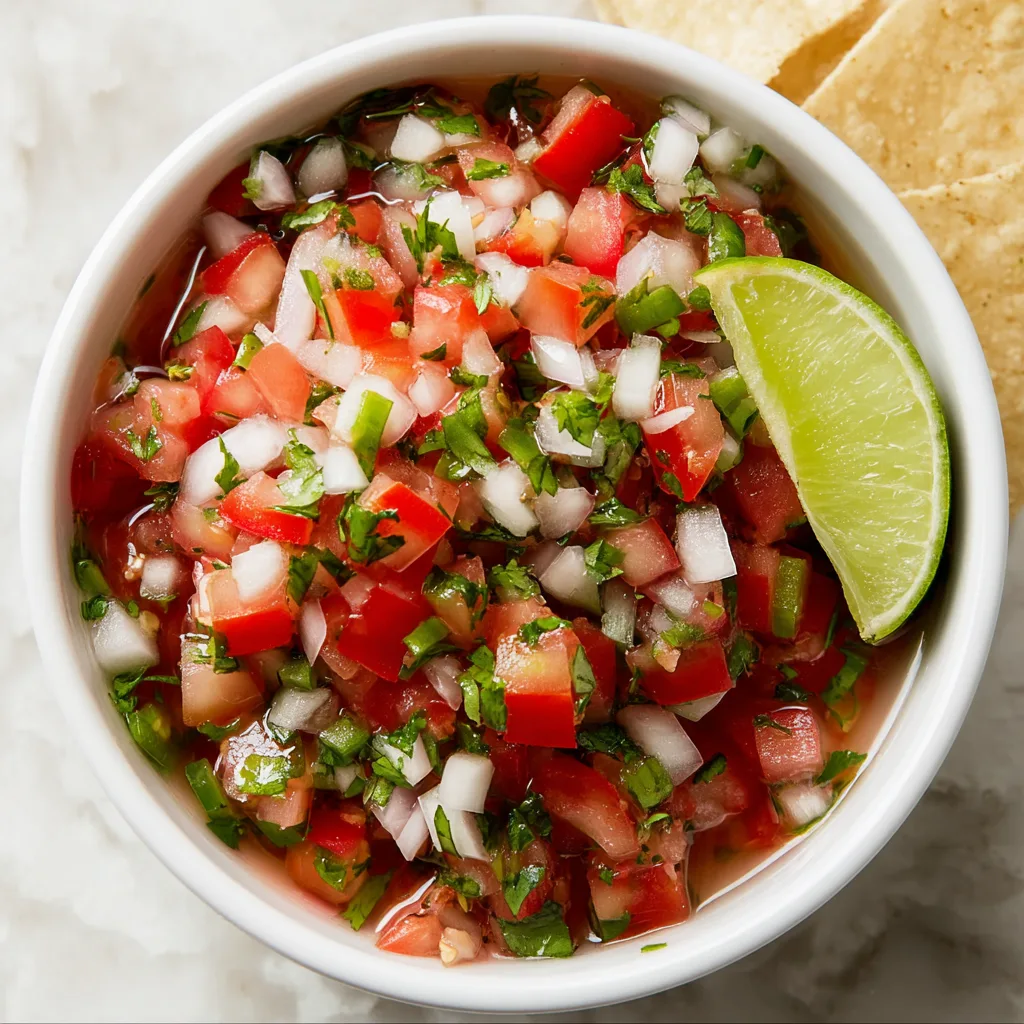
Pico de gallo, sometimes called salsa fresca or salsa bandera (because its colors resemble the Mexican flag), is different from blended or cooked salsas. Instead of being smooth or simmered, pico is made entirely from raw, finely chopped vegetables. The result is a chunky, vibrant, super-fresh mix that offers both crunch and brightness.
The magic lies in balance:
- Sweetness from ripe tomatoes
- Heat from jalapeños or serranos
- Crunch from white onion
- Freshness from cilantro
- Tang from lime juice
- Seasoning from the right amount of salt
A great pico is never watery, never mushy, and never overly spicy—it’s all about clean, bold flavor.
Choosing the Best Ingredients
Tomatoes
Roma tomatoes are the classic choice because they’re firm, flavorful, and lower in moisture. Overly juicy tomatoes will make your pico watery. If using heirloom or vine-ripe tomatoes, scoop out excess seeds before chopping.
Onion
White onion is the traditional pick. It has the right level of bite without overpowering other flavors. Red onion works too, offering a slightly sweeter, deeper flavor.
Jalapeño or Serrano
Jalapeño is standard, offering mild heat. For those who love spice, serrano peppers bring a sharper kick.
Cilantro
Always use fresh cilantro. Avoid parsley substitutes—pico isn’t pico without that signature herbal pop.
Lime
Freshly squeezed lime juice is essential. Bottled lime juice lacks the vibrant acidity that makes pico sing.
Salt
Salt doesn’t just season—it draws out moisture and blends flavors. Starting small and adjusting is key.
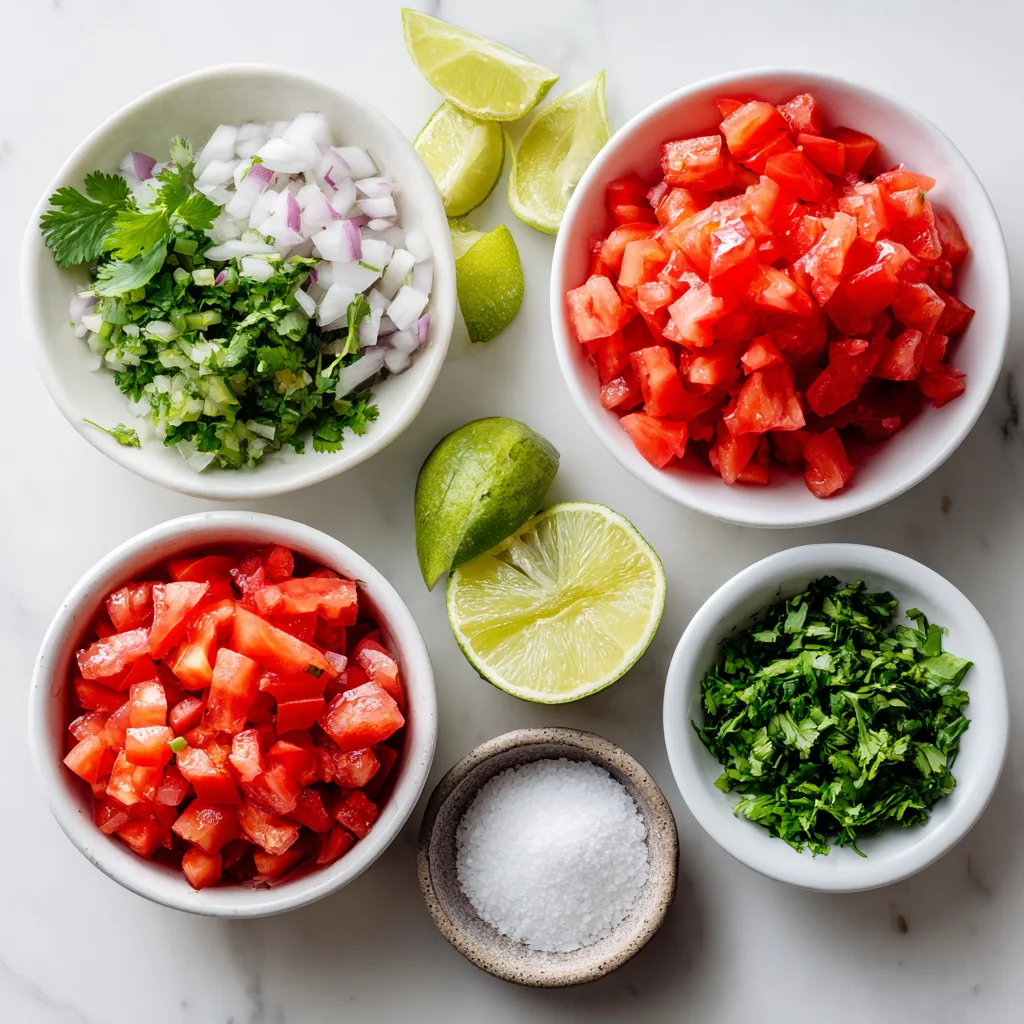
Ingredients
- 4 ripe Roma tomatoes, finely diced
- 1 medium white onion, finely chopped
- 1–2 jalapeños, seeds removed for mild heat, minced
- ½ cup fresh cilantro, chopped
- Juice of 1 lime (more to taste)
- ½ tsp salt, plus more as needed
- Optional: 1 small garlic clove, minced
- Optional: a pinch of ground black pepper
Instructions
- Prep the tomatoes.
Dice the tomatoes into small, even cubes. If they’re too juicy, remove some seeds to prevent excess liquid. - Chop the onion.
Finely chop the white onion. Rinse briefly under cool water if you prefer a milder onion flavor. - Prepare the jalapeño.
Remove seeds for mild heat or keep them for extra spice. Mince very finely. - Combine ingredients.
Add tomatoes, onion, jalapeño, and cilantro to a mixing bowl. - Add lime and salt.
Squeeze fresh lime juice over the mixture and sprinkle with salt. Start with half the lime; add more to taste. - Mix gently.
Stir until well combined but avoid crushing the tomatoes. - Taste and adjust.
Add more lime, salt, or jalapeño as needed. - Rest for 10–20 minutes.
Allow flavors to marry. Serve immediately or refrigerate for up to 24 hours.
Tips for Making the Best Pico de Gallo
1. Dice Everything Evenly
Uniform cuts ensure balanced flavor in every bite.
2. Salt Properly
Salt is essential not just for taste but also for drawing out moisture. Add gradually to avoid oversalting.
3. Don’t Skip the Resting Time
Allowing the mixture to sit helps flavors blend beautifully.
4. Keep It Fresh
Pico de gallo is best the same day. After 24 hours, the tomatoes soften and lose vibrancy.
5. Control the Heat
Taste your jalapeños before adding them. Some are surprisingly mild, while others are unexpectedly hot.
Variations to Try
Mango Pico de Gallo
Replace 1–2 tomatoes with diced mango for a sweet, tropical twist.
Avocado Pico
Add diced ripe avocado at the end for a creamy, satisfying version.
Cucumber Pico
Mix in chopped cucumber for a refreshing crunch.
Roasted Corn Pico
Fold in grilled corn kernels for extra sweetness and texture.
Serrano Pico
Swap jalapeños for serranos for elevated heat and sharper flavor.
Serving Suggestions
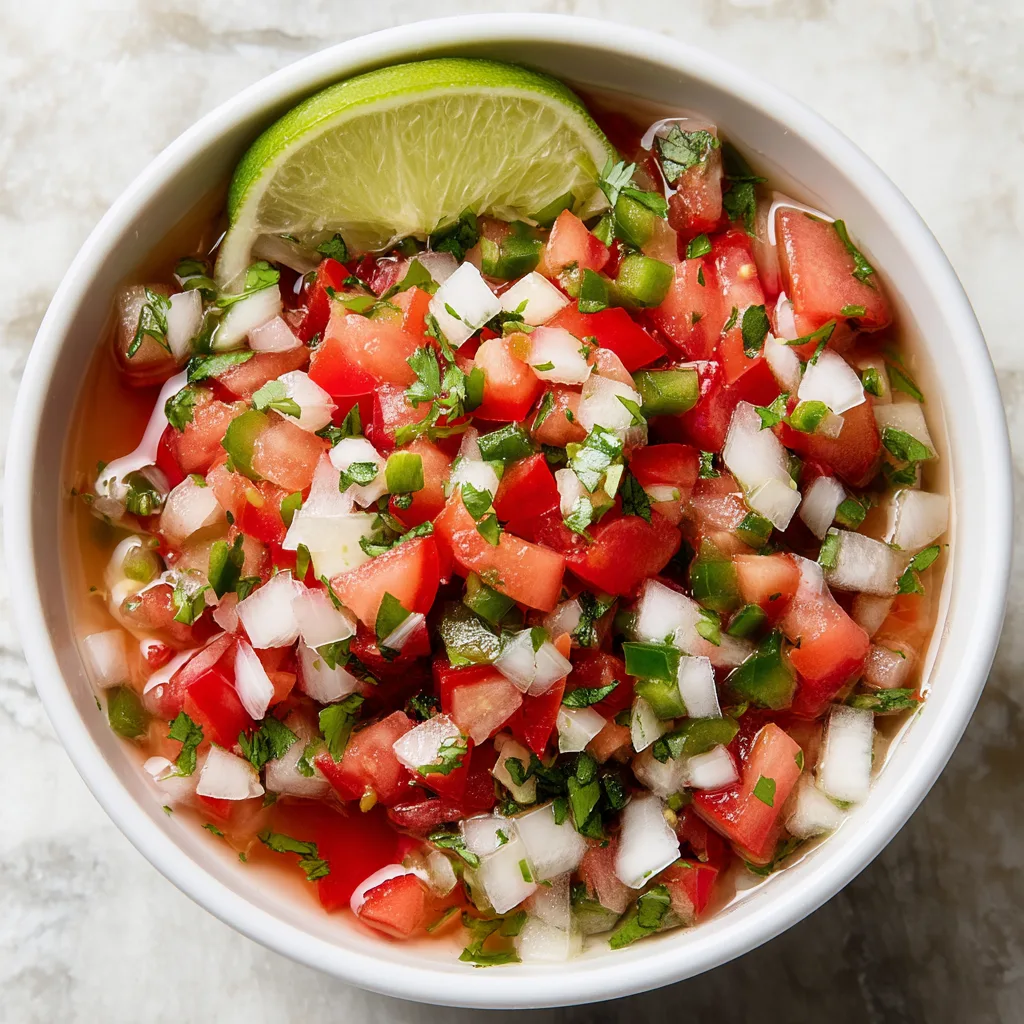
Pico de gallo is incredibly versatile. Try it with:
- Tacos, burritos, and quesadillas
- Grilled chicken or steak
- Fresh tortilla chips
- Scrambled eggs or omelets
- Rice bowls or salads
- Fish tacos or grilled shrimp
- As a fresh topping for chili or soups
Fun Cultural Notes
Pico de gallo has roots in central Mexico, long before blenders became common. Its name (“rooster’s beak”) has debated origins—some say early diners ate it using their fingers, mimicking a beak shape. Others claim the name references the chopped, pecked appearance of the ingredients. No matter the origin, pico remains a fundamental part of traditional Mexican cuisine and modern cooking alike.

Fresh Homemade Pico de Gallo
Ingredients
Equipment
Method
- Dice the tomatoes and remove excess seeds if needed.
- Chop the white onion finely.
- Mince the jalapeños, removing seeds for mild heat.
- Combine tomatoes, onion, jalapeños, and cilantro in a bowl.
- Add lime juice and salt, then mix gently.
- Taste and adjust seasoning as needed.
- Let rest 10–20 minutes before serving.