Easy Japanese Beef Curry Recipe: Comfort Food Made Simple
If you’re craving a warm, comforting dish that’s rich in flavor yet simple to prepare, this Easy Japanese Beef Curry is exactly what you need. Known for its mild sweetness, thick texture, and satisfying depth, Japanese curry has become a beloved staple not only in Japan but around the world. Unlike spicier Indian or Thai curries, Japanese curry leans toward a hearty, stew-like consistency with a subtle blend of spices that appeals to all palates—even those who typically shy away from spicy food.
This recipe is designed to be approachable, using easy-to-find ingredients and straightforward steps. Whether you’re cooking for a cozy family dinner, meal prepping for the week, or exploring new cuisines, this dish delivers comfort in every bite.

What Makes Japanese Beef Curry Unique?
Japanese curry, often served as “curry rice,” is distinct from other curry styles. It’s thicker, slightly sweet, and typically includes chunks of meat and vegetables simmered in a flavorful sauce. The secret lies in curry roux blocks—pre-made seasoning cubes that melt into the dish, creating a velvety consistency and balanced flavor.
This version focuses on beef, which becomes incredibly tender after simmering. Combined with potatoes, carrots, and onions, it creates a wholesome and satisfying meal that feels like a warm hug on a plate.
Ingredients
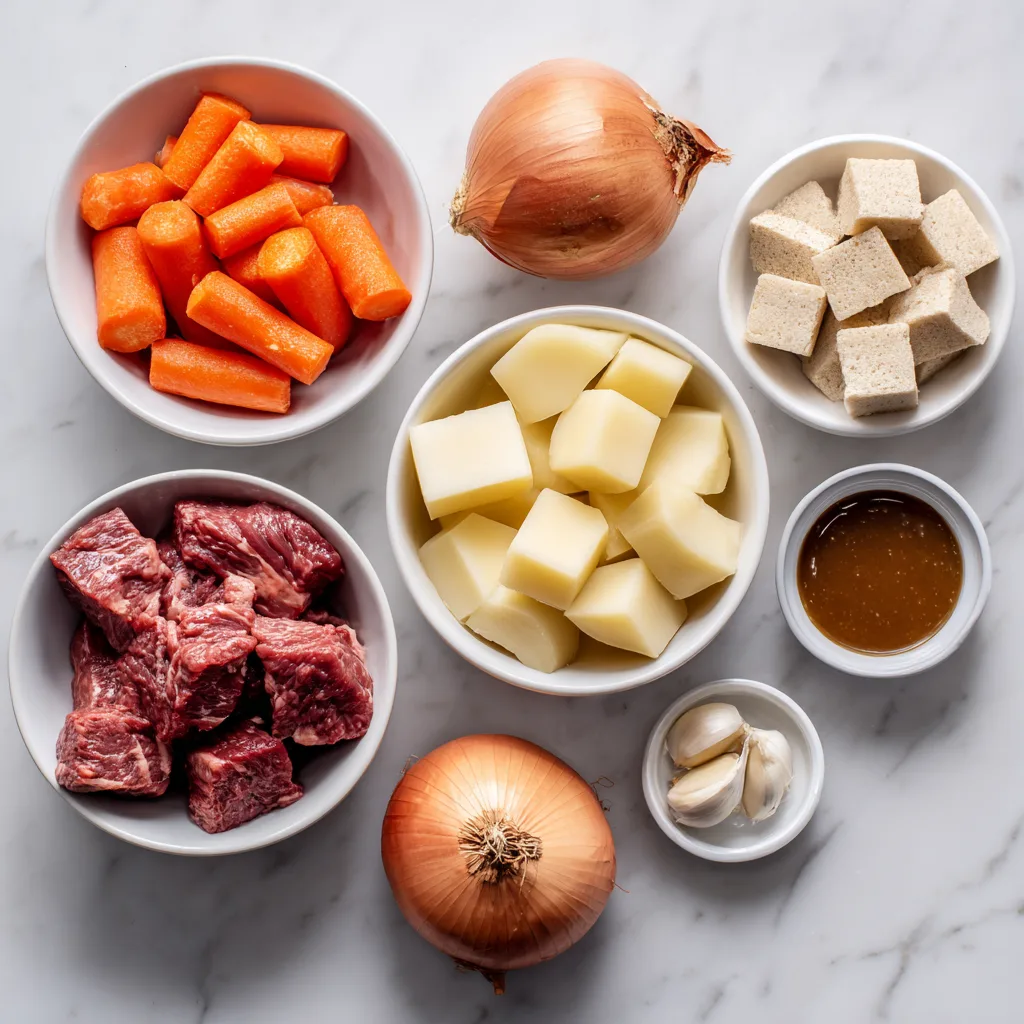
- 500g beef chuck, cut into bite-sized cubes
- 2 tablespoons vegetable oil
- 1 large onion, thinly sliced
- 2 cloves garlic, minced
- 1 tablespoon fresh ginger, grated
- 2 medium carrots, peeled and chopped
- 2 medium potatoes, peeled and cubed
- 4 cups water or beef broth
- 2–3 Japanese curry roux cubes (store-bought)
- 1 tablespoon soy sauce
- 1 teaspoon sugar (optional, for balance)
- Salt and pepper to taste
- Cooked white rice, for serving
- Fresh parsley or green onions for garnish
Instructions
- Heat the vegetable oil in a large pot over medium heat. Add the beef cubes and sear until browned on all sides. Remove and set aside.
- In the same pot, add the sliced onions. Cook for about 5–7 minutes until they become soft and slightly caramelized.
- Stir in the garlic and ginger, cooking for another minute until fragrant.
- Return the beef to the pot and add the carrots and potatoes. Stir everything together.
- Pour in the water or beef broth, ensuring all ingredients are covered. Bring to a gentle boil.
- Reduce heat to low, cover, and simmer for 25–30 minutes until the vegetables are tender and the beef is soft. Skim off any foam if necessary.
- Turn off the heat and add the curry roux cubes. Stir until fully dissolved and the sauce thickens.
- Return to low heat and simmer for an additional 5–10 minutes, stirring occasionally.
- Add soy sauce and sugar (if using). Adjust seasoning with salt and pepper.
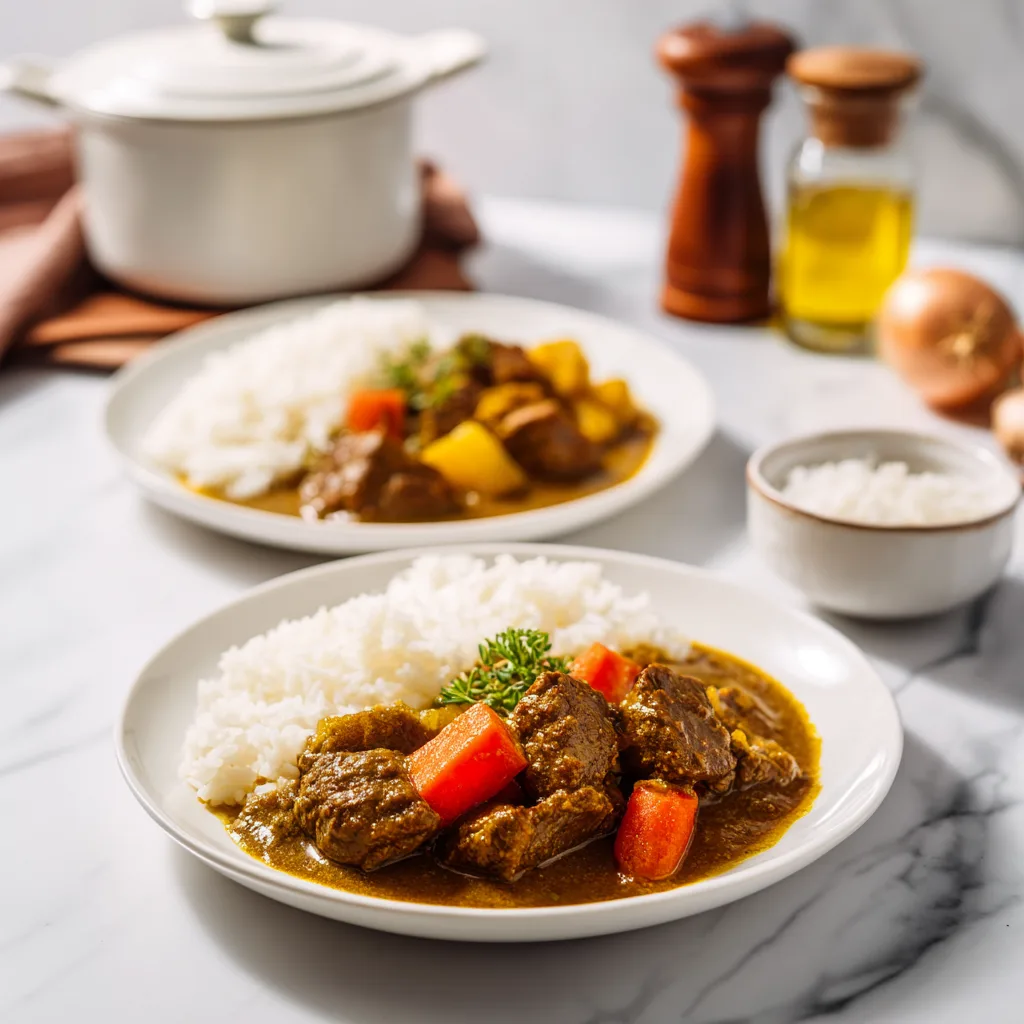
- Serve hot over freshly cooked white rice and garnish with parsley or green onions.
Tips for the Best Japanese Beef Curry
Choose the Right Cut of Beef:
Beef chuck is ideal because it becomes tender after slow cooking. Avoid lean cuts as they can turn tough.
Don’t Skip Browning:
Searing the beef adds depth and richness to the final dish.
Control the Thickness:
If your curry is too thick, add a splash of water. If too thin, let it simmer uncovered for a few minutes.
Use Quality Roux:
Different brands of curry roux vary in flavor. Experiment to find your favorite balance of sweetness and spice.
Flavor Variations
One of the best things about this dish is how customizable it is. Here are a few creative twists:
Spicy Version:
Add chili flakes or a dash of hot sauce for extra heat.
Fruity Sweetness:
Grate in a small apple or add a spoonful of honey for a sweeter profile.
Extra Umami:
A splash of Worcestershire sauce or a cube of dark chocolate can deepen the flavor.
Vegetarian Option:
Swap beef for mushrooms or tofu and use vegetable broth instead.
Serving Suggestions
Japanese beef curry is traditionally served with steamed white rice, but you can elevate the meal with these ideas:
- Pair with a simple cucumber salad for freshness
- Add pickled vegetables for contrast
- Serve with a soft-boiled egg for extra richness
- Try it over noodles instead of rice for a twist
Cultural Context
Japanese curry has an interesting history. It was introduced to Japan in the late 19th century and evolved into a uniquely Japanese dish. Today, it’s one of the most popular comfort foods in the country, often served in homes, school cafeterias, and restaurants.
Unlike other curries, it’s less about heat and more about balance—combining savory, slightly sweet, and mildly spiced elements into one harmonious dish.
Storage and Meal Prep
This dish stores exceptionally well, making it perfect for meal prep.
Refrigerator:
Store in an airtight container for up to 4 days.
Freezer:
Freeze for up to 2 months. Thaw overnight in the fridge before reheating.
Reheating Tip:
Add a splash of water when reheating to restore the creamy consistency.
Interestingly, many people find that Japanese curry tastes even better the next day as the flavors continue to develop.
Why You’ll Love This Recipe
- Simple and beginner-friendly
- Rich, comforting flavor
- Easily customizable
- Perfect for leftovers
- Family-approved meal
This Easy Japanese Beef Curry strikes the perfect balance between convenience and flavor. It’s a dish you’ll find yourself returning to again and again, whether you’re cooking for yourself or sharing with loved ones.
Final Thoughts
There’s something deeply satisfying about a bowl of Japanese beef curry. It’s warm, hearty, and full of comforting flavors that make any day feel a little better. With its simple ingredients and straightforward method, this recipe proves that you don’t need complicated techniques to create something truly delicious.
Give it a try, and you might just discover your new favorite comfort food.
Easy Japanese Beef Curry
Ingredients
Equipment
Method
- Brown beef in oil and set aside.
- Cook onions until soft, then add garlic and ginger.
- Add beef and vegetables, then pour in liquid.
- Simmer until ingredients are tender.
- Stir in curry roux until thickened.
- Serve hot with rice.